
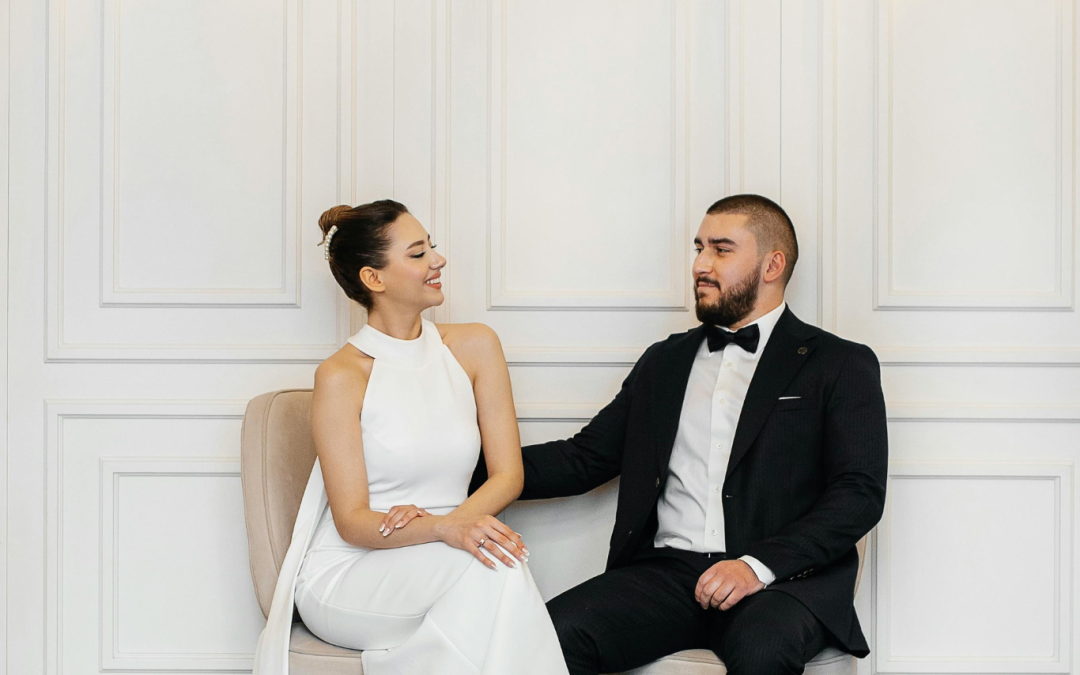
You’re both capable. Driven. Good at figuring things out.
In most areas of life, that’s an enormous asset. You solve problems. You perform under pressure. You don’t wait for someone else to fix things — you fix them yourself.
But in a relationship, that same strength can quietly become a barrier.
Because relationships — real, deep, sustaining ones — require something that high achievers are often least practiced at: being genuinely vulnerable. Admitting you don’t have it figured out. Letting your partner see the parts of you that aren’t performing well.
And when both partners share that profile? The dynamic gets complicated in ways that are easy to miss because everything on the surface still looks functional.
Why High Achievers Struggle With Vulnerability
Most high-achieving people developed their drive in environments where performance was rewarded and need was either ignored or penalized. You learned early that competence was safe. That self-sufficiency was valued. That needing help — or worse, appearing to struggle — carried a cost.
Those early lessons don’t disappear when you enter a relationship. They show up as a reluctance to be seen in difficulty. A tendency to manage feelings rather than express them. A quiet belief, operating just below awareness, that real intimacy is a kind of exposure — and exposure is dangerous.
This isn’t weakness. It’s a very logical adaptation to an early environment. But in an intimate relationship, it creates distance — because genuine connection requires exactly the kind of openness that high-achieving nervous systems have learned to suppress.
What It Looks Like in a High-Achieving Couple
When both partners carry this profile, the relationship can look impressive from the outside while feeling surprisingly lonely from the inside.
Conversations stay in the functional zone — what needs to happen, what’s next, what the plan is. Emotional needs get intellectualized rather than expressed. Vulnerability gets redirected into productivity. Conflict, when it surfaces, becomes another problem to be solved efficiently rather than a signal about something that needs to be felt and worked through.
Neither partner is doing this maliciously. They’re both doing what they know how to do — and what they’ve been rewarded for their entire lives. But the relationship pays a price. Because you can be two highly capable people and still feel profoundly alone together.
The Particular Strain of Competitive Dynamics
In some high-achieving couples, there’s also an undercurrent of competition — conscious or not. Whose career is more demanding right now. Whose stress is more legitimate. Whose needs should take priority.
When both partners are used to being the most competent person in the room, deferring to each other — in decisions, in emotional needs, in whose experience gets centered — can feel threatening to identity in ways that are hard to name.
This dynamic rarely surfaces openly. But it can quietly shape everything: how decisions get made, how conflict gets handled, how much genuine support each person actually feels from the other.
What Vulnerability Actually Asks of High Achievers
Vulnerability in a relationship doesn’t mean falling apart. It doesn’t mean abandoning the competence and strength that are genuinely part of who you are.
It means being willing to say: this is hard for me right now. It means letting your partner see you in a moment of uncertainty without immediately moving to resolve it. It means asking for comfort rather than always being the one who provides it.
For many high achievers, this feels backwards. Like going against the grain of everything that’s worked for them.
But in a relationship, it’s precisely this willingness — to be known, not just admired — that creates the kind of closeness that sustains a partnership over decades. Not the performance. The person underneath it.
Why Therapy Can Feel Counterintuitive — And Why It Works
High-achieving couples sometimes resist therapy for the same reason they resist vulnerability: it feels like admitting they can’t handle something themselves.
But the most effective couples therapy isn’t about fixing incompetent people. It’s about helping capable people develop the one skill set their training never covered — how to be genuinely close to another human being, even when that requires letting their guard down.
That’s not weakness. That’s the hardest and most rewarding work two people can do together.
Ready to see what’s possible for your relationship? Schedule a free 30-minute consultation and let’s talk about where you are and where you want to be.
