
Your body knows before your brain does.
When your partner says something that stings, you don’t stop and think about how to respond. Your body just reacts. Your heart speeds up. Your chest gets tight. Your voice comes out sharp — or you go completely quiet and shut down.
That’s not a character flaw. That’s your nervous system doing exactly what it was built to do.
The problem is, it was designed to protect you from danger. Not to help you navigate a hard conversation with someone you love.
Your Brain Is Always Scanning
Deep inside your brain, there’s a system that works like a security alarm. It’s always on. It’s always watching. And its only job is to figure out: am I safe right now?
This system is fast. It works before you’re even aware of it. And it doesn’t just respond to physical danger — it responds to emotional danger too.
Being ignored. Being criticized. Feeling dismissed. Feeling controlled. Feeling like you don’t matter to the person who’s supposed to matter most.
All of these can set off the same alarm as a real threat.
So when your partner raises their voice, or goes cold, or gives you that particular look — your body responds as if there’s danger. Your thinking brain steps back. Your survival brain takes over.
And now you’re not having a conversation anymore. You’re reacting.
Why This Keeps Happening
Here’s what makes this so hard: you’re not doing it on purpose.
Most couples don’t wake up and decide to fight. They don’t choose to shut down, or escalate, or say things they regret. It happens fast, and it feels out of control — because in a very real way, it is.
When your survival system is running the show, the part of your brain that handles empathy, reasoning, and communication goes offline. You lose access to your best self. Your partner loses access to theirs. And you’re both stuck in reaction mode, hurting each other without really meaning to.
This is why the same fight keeps happening. It’s not because you’re incompatible. It’s because your nervous systems keep getting triggered in the same ways — and nobody has taught you how to change that.
What Two Nervous Systems in Conflict Look Like
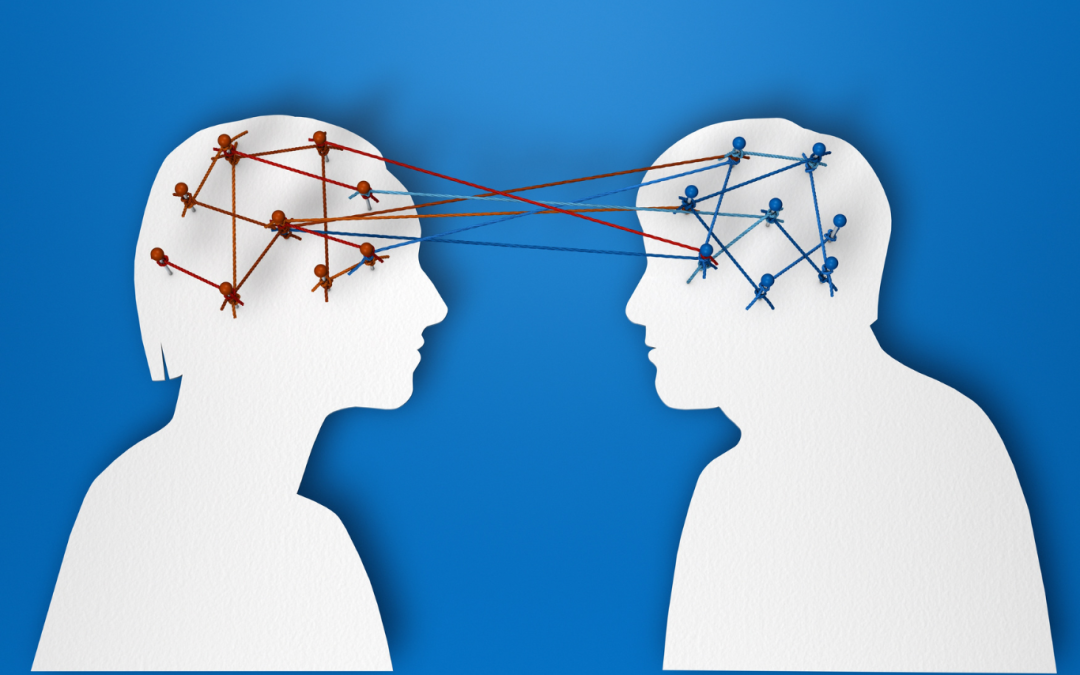
Imagine this: something small happens. Maybe your partner makes a comment that hits wrong. Your body tenses. Your tone shifts. Your partner notices that shift — and their nervous system responds to your reaction. Now they’re activated too.
Within seconds, you’ve gone from a normal moment to full-blown conflict. And neither of you is entirely sure how you got there.
This is what couples therapists call co-escalation. Two nervous systems feeding off each other, both in threat mode, neither feeling safe enough to slow down.
It’s not about who started it. It’s about the cycle itself — and learning how to interrupt it.
The Body Keeps the Score in Your Relationship Too
You may have heard that phrase in the context of trauma. But it applies to relationships too.
Every fight that doesn’t get repaired leaves a small residue. Every time you reach out and your partner isn’t there, your nervous system notes it. Every time you feel criticized, dismissed, or alone in the relationship — your body files it away.
Over time, that history shapes how quickly your alarm system gets triggered. It shapes how much you trust your partner. It shapes whether you move toward them when things get hard — or whether you pull away.
This isn’t weakness. It’s biology. And understanding it is the first step to changing it.
What’s Actually Possible
Here’s the part that often surprises people: nervous systems are not fixed.
They learn. They adapt. And with the right kind of support, two people can actually learn to regulate together — to become a source of calm for each other rather than a source of threat.
This is one of the core things we work on in couples therapy. Not just what to say during a conflict, but how to help your body feel safe enough to stay present. How to recognize when you’re escalating — and what to do before it’s too late. How to come back to each other after a rupture.
It’s some of the most important work a couple can do. Because when your nervous systems learn to work together instead of against each other, everything changes. Fights become less frequent — and less destructive. Repairs happen faster. The relationship starts to feel like a safe place again.
That’s not a fantasy. That’s what’s possible when two people are willing to do the work.
Ready to see what’s possible for your relationship? Schedule a free 30-minute consultation and let’s talk about where you are and where you want to be.
